
The duty to prevent sexual harassment is changing. In October 2026, the bar rises from “reasonable steps” to “all reasonable steps.”
It's a deliberately higher threshold, and tribunals are no longer satisfied by a policy on a shelf or a video everyone half-watched once a year. They look at what you actually did, how often, and how well. Scenari helps you do the real work, and shows you've done it.
What's actually changing
Since October 2024, the Worker Protection Act 2023 has required employers to take reasonable steps to prevent the sexual harassment of their staff. From October 2026, the Employment Rights Act 2025 raises that standard to all reasonable steps, and brings back employer liability for harassment by third parties: customers, clients, contractors and visitors, not just colleagues. It is the most significant shift in this area of employment law in a generation.
And since April 2026, reporting sexual harassment counts as a protected disclosure under whistleblowing law, which means the way a manager handles that first conversation now carries real legal weight of its own.
A policy on a shelf is no longer a defence
This is the part many organisations haven't caught up with. Tribunals no longer ask simply whether you have a policy. They look at how it's put into practice: the frequency and quality of your training, whether your people could actually handle a real situation, and whether you can show it. A certificate proving someone watched a video and clicked “next” doesn't carry that weight anymore. And the stakes are real: where the duty is breached, a tribunal can increase compensation by 25%, on awards that are already uncapped.
None of this is meant to frighten you. It's meant to be honest about where the bar now sits, and clear that there's a practical, proportionate way to meet it.
Being ready means being genuinely capable
Real readiness isn't a folder of completed e-learning. It's a workforce that knows what to do when something actually happens, and an organisation that can demonstrate it took its duty seriously.
Scenari does both. Your people step into the situations that carry the most risk (recognising harassment, responding to a disclosure, the conversations managers dread) and practise how they'd actually handle them. They don't tick a box; they build capability that stays with them.
Proof you can put in front of a tribunal
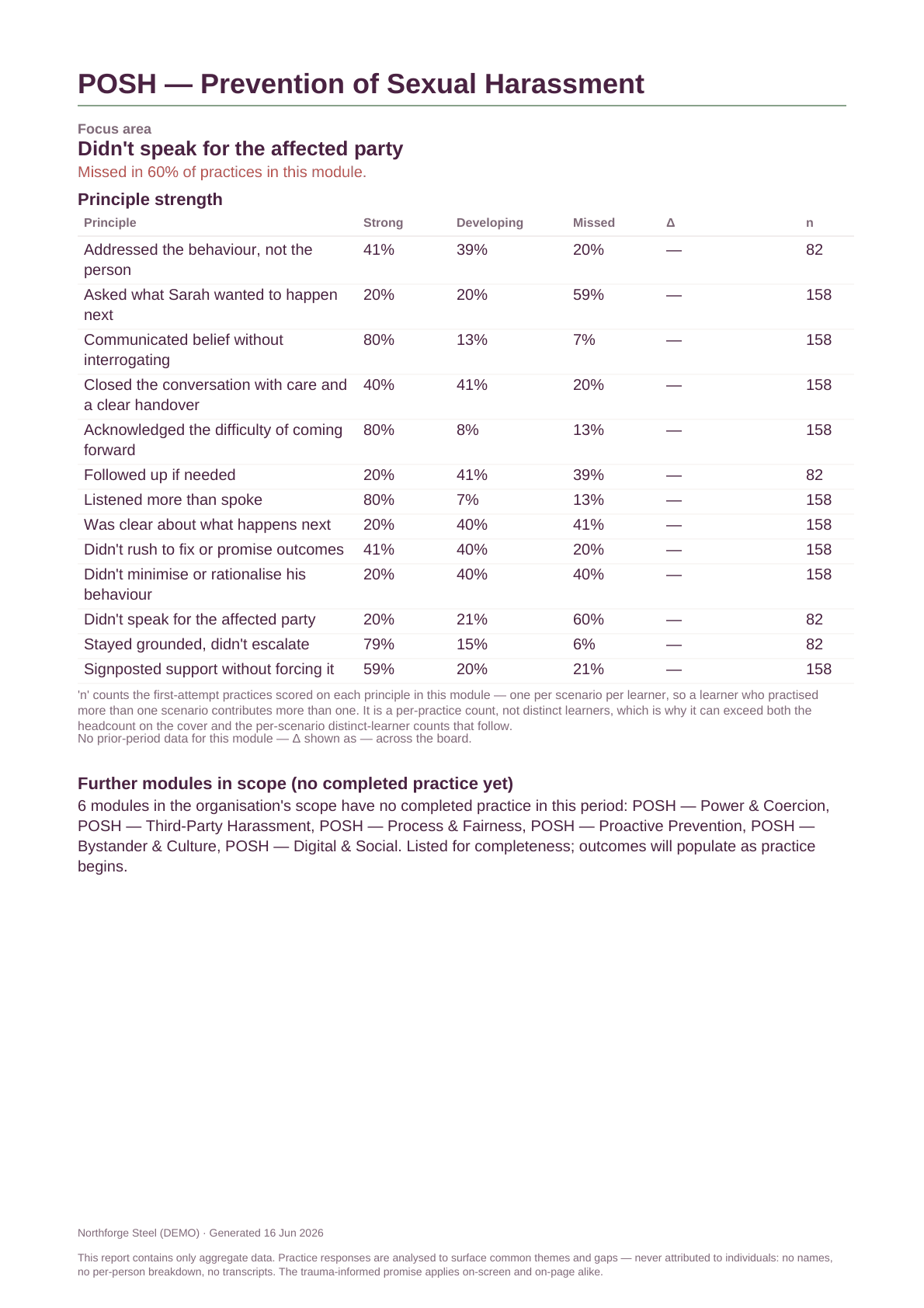
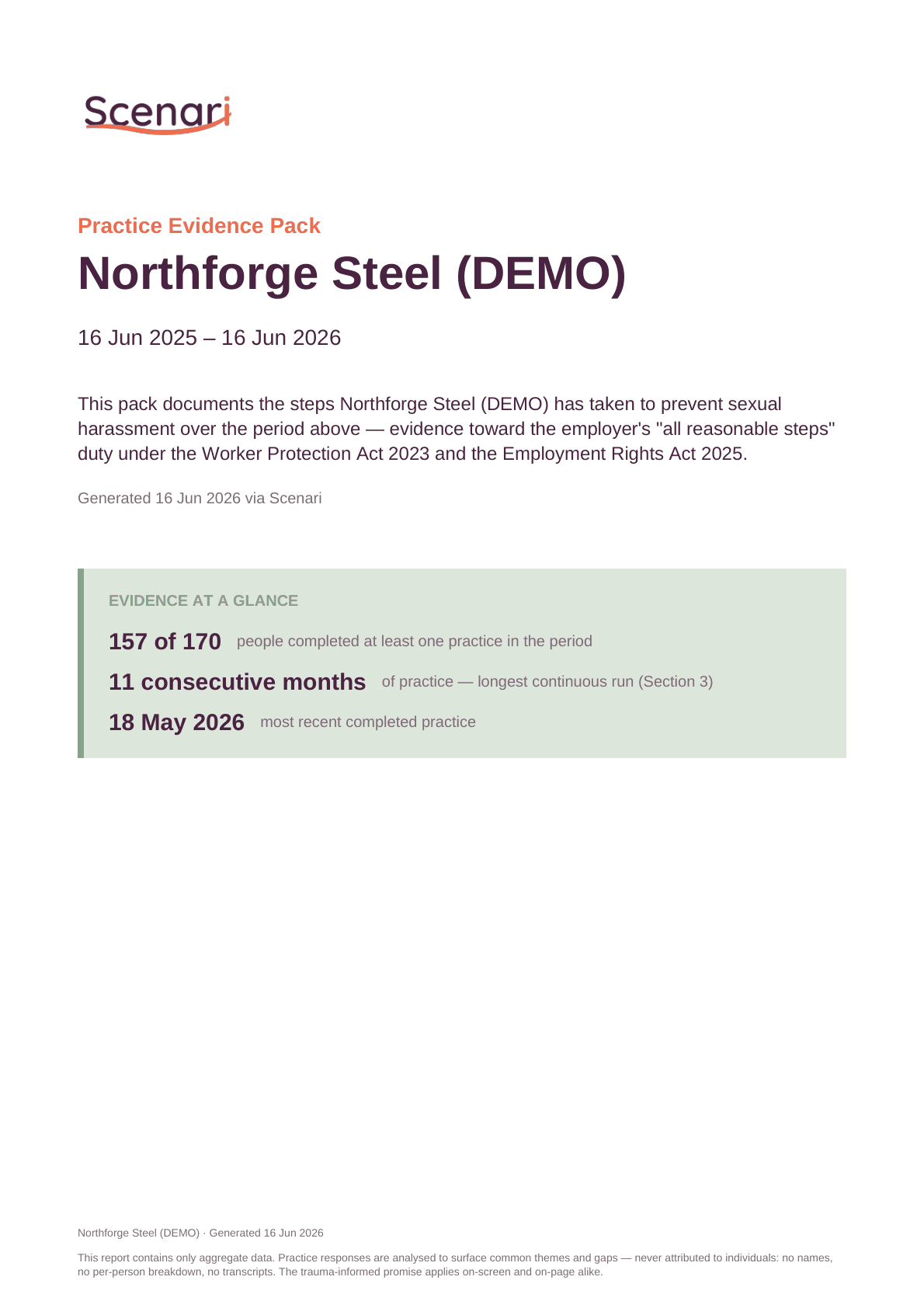
Every practice your people do builds an audit-ready record. At any moment you can generate the Practice Evidence Pack, a board-ready, tribunal-ready document showing the steps you've taken: who practised, how often, where capability is strong and where you're focusing. The documented evidence that you've taken your duty seriously, generated as you go rather than reconstructed in a panic afterwards.
Start with the free All Reasonable Steps Checker
Not sure where your organisation stands against the new bar? Take our free All Reasonable Steps Checker. In a few minutes, you'll get a clear, personalised picture of where you're genuinely prepared and where the gaps are, mapped against what tribunals and the EHRC now expect.
No sales pitch. No obligation. Just an honest starting point.
Talk to a specialist, not a salesperson
When you're ready to talk, you'll speak with a trauma-informed HR professional who lives this work every day, not a sales team reading from a script. We'll show you exactly how Scenari fits your organisation, and we'll be straight with you about whether it's the right fit.